Financial overview
A view of business figures tied to competitions and seasons.


We develop digital solutions built around how your company actually operates — based in Podgorica since 2022.

Organizing sports competitions involves a large number of interconnected pieces of information and processes. Clubs. Teams. Players. Registrations. Competitions. Matches. Schedules. Match officials. Assignments. Reports. Documentation. A change in one part of the process can affect another. So the goal wasn't to build yet another data-entry tool — it was to connect the Montenegrin Basketball Federation's core processes into a single digital environment.
Competitions, team entries, player registrations per league, players, coaching-staff entries and records.
Match history, upcoming matches, schedule creation, digital match-day rosters, delegate reports.
Referees, delegates, commissioners, clubs, venues, users, leagues and seasons — all in one place.
Financial overview, match calendar, referee and delegate reports, round overview, match-officials report.
Federation, club, delegate, referee, commissioner and delegate supervisor — each with access tailored to their role.
A built-in helpdesk ticket system, directly inside the platform.
Digitalization isn't simply turning a paper form into an online one. The real value comes from connecting processes to each other. A club enters a team. The team takes part in a given competition. Players are registered for that team. Matches are created. Match officials are assigned to those matches. Results and information become part of the central system. Based on that data, overviews and reports can be generated — all without re-entering the same information across several disconnected systems.
We don't sell off-the-shelf software. We build systems around the business process.
A club browses open competitions and enters a team directly through the platform, with the option to attach an entry form where one is required. Every entry gets an automatically generated number, and the Federation approves, rejects, or leaves it pending — the status is visible to the club in real time, with no phone calls or email back-and-forth.
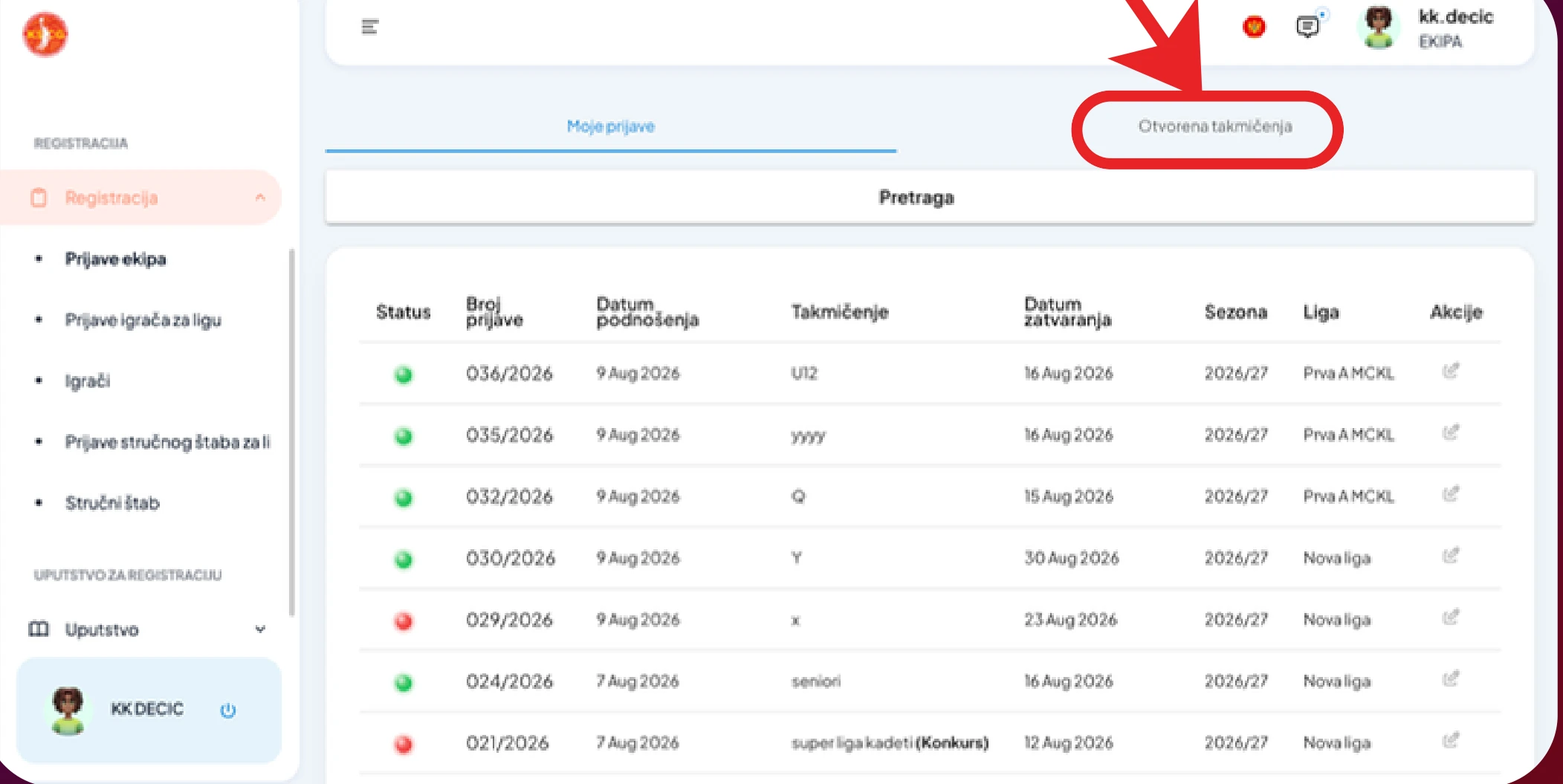
A club's entries — status, competition, league and deadlines
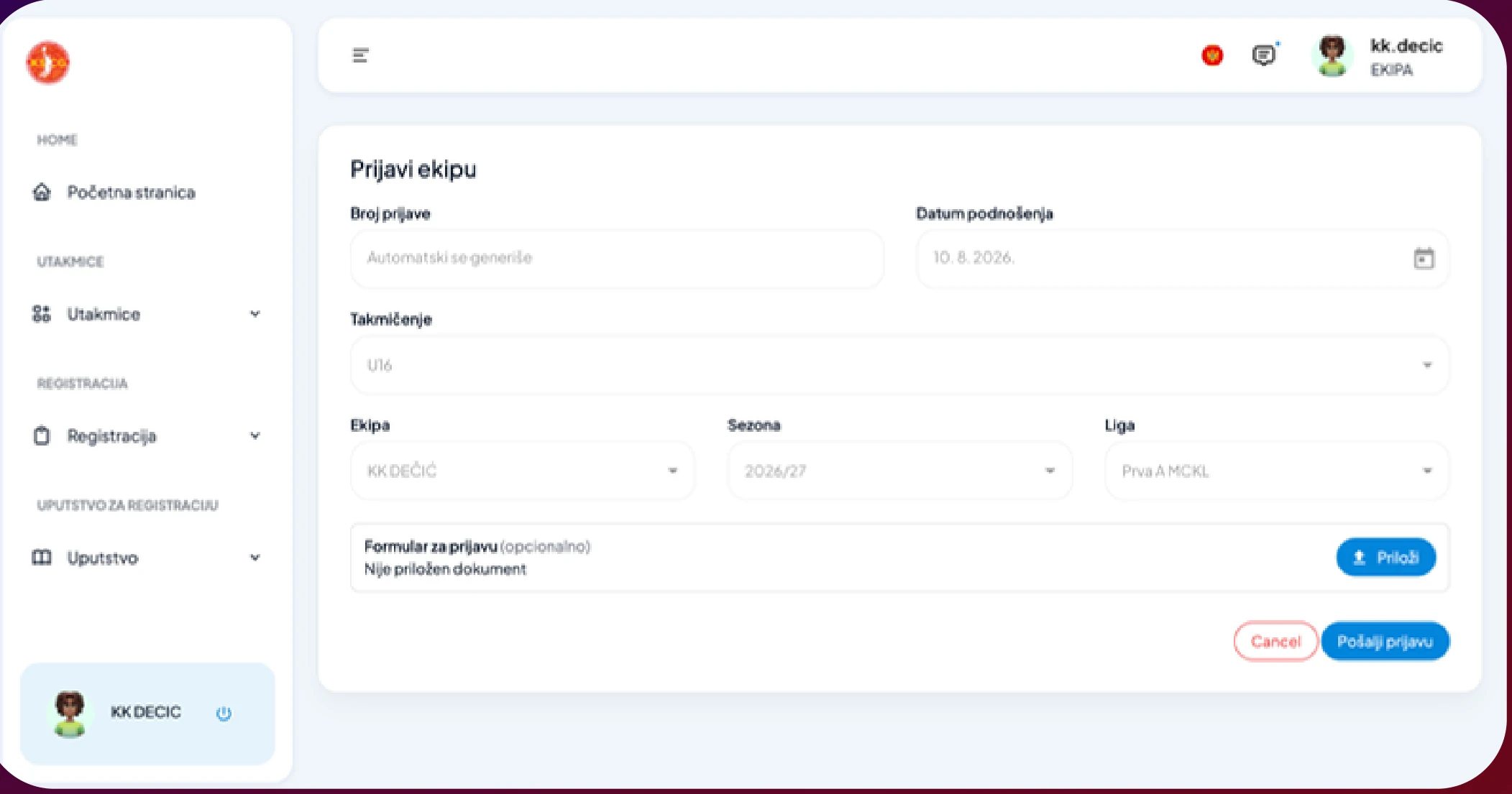
Team entry — the entry number is generated automatically
A club creates a player profile — first name, last name, date and place of birth, foreign-player status where applicable — and the system automatically reserves a license number for the current entry, holding that reservation for a limited time while the entry is completed. Approval requires supporting documents: a photo, a birth-certificate extract and, where relevant, a passport. Once approved, the player's data is reused across league registrations and match-day digital rosters — with no re-entry.
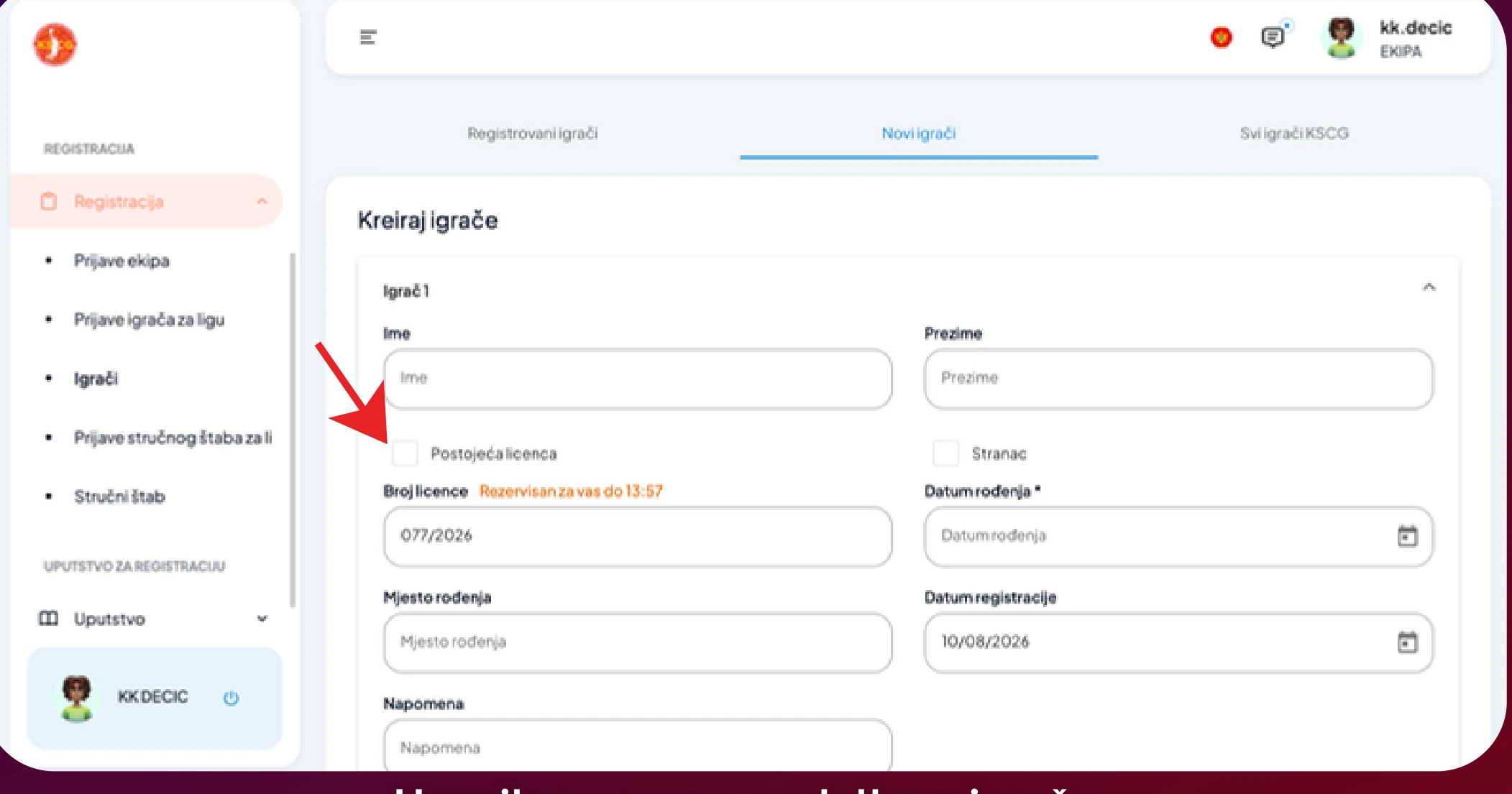
The license number is reserved automatically while the entry is in progress
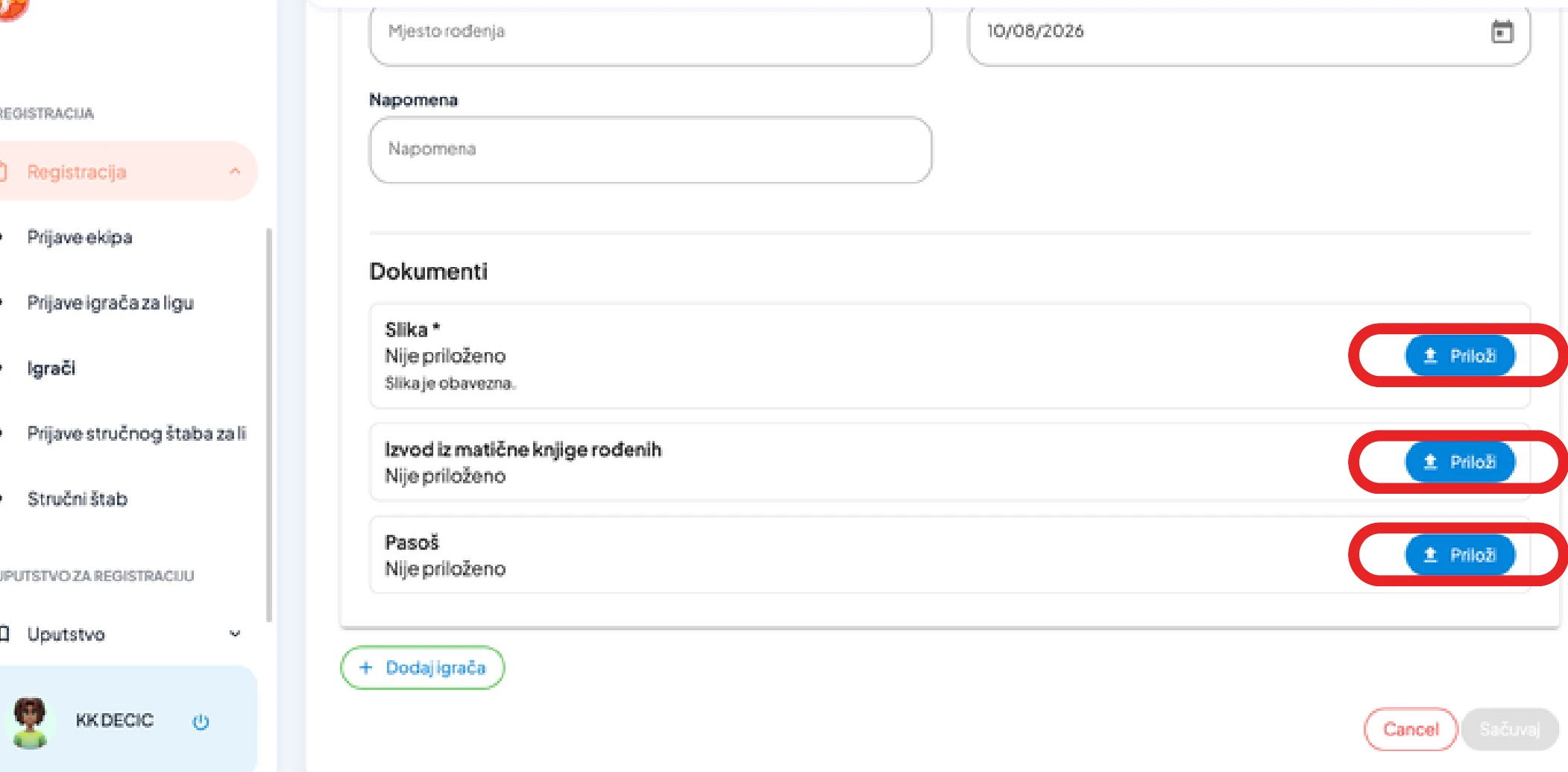
Photo, birth-certificate extract and passport — attached digitally to the profile
The system manages the full competitive pyramid of Montenegrin basketball — senior leagues (men's and women's), regional divisions, play-offs and the cup, as well as youth leagues across several age categories and regions. An administrator builds the schedule by round: choosing a league, season and round range, then adding several matches at once for each round — home team, away team and the number of referees needed — and saving the entire schedule in one step instead of entering every match individually.
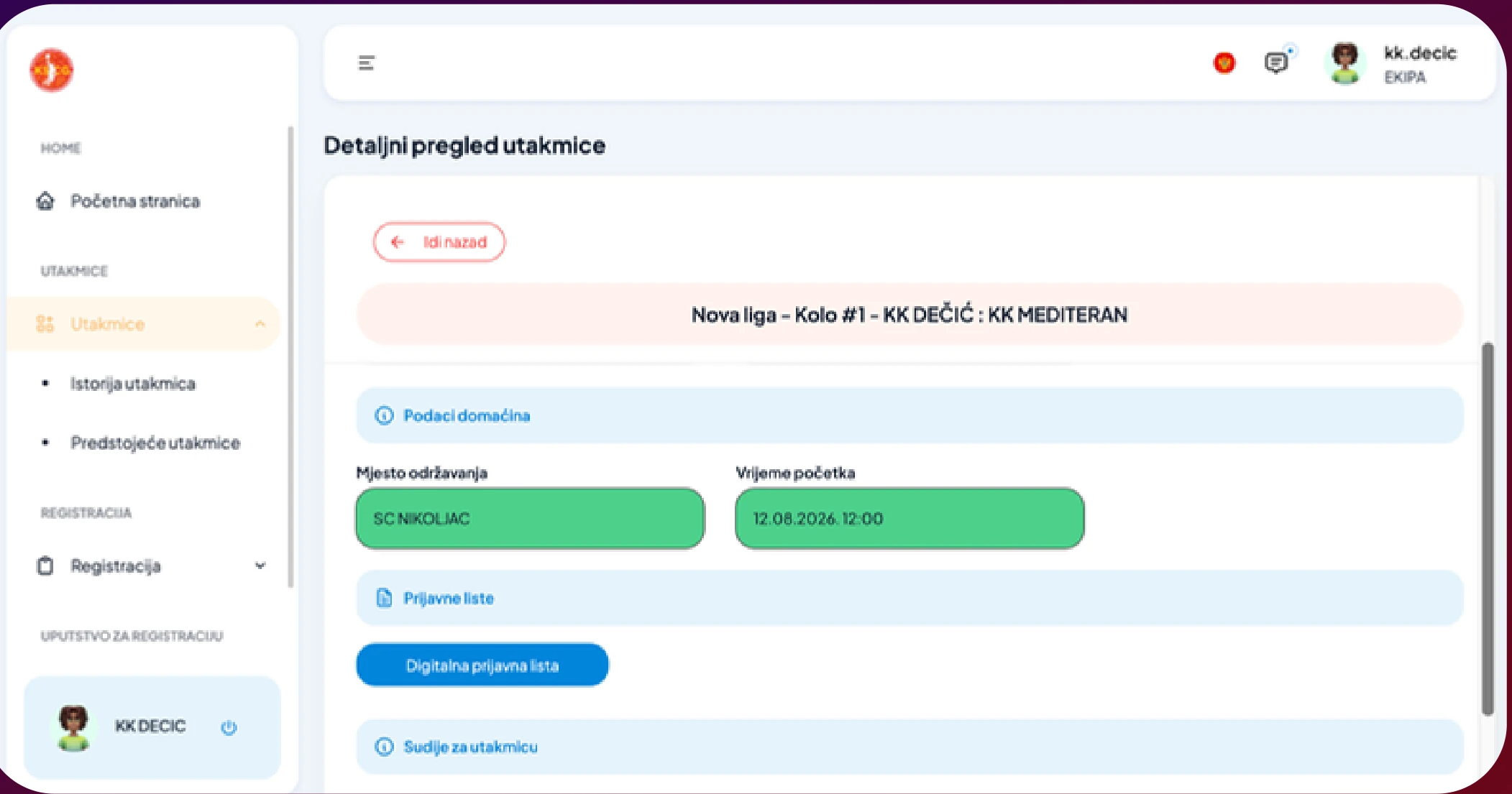
Detailed match view — venue, time, rosters and referees on a single screen
Every match in the system has an assigned delegate, and their report covers far more than the final score: the score by quarter, the full crew of match officials (head referee, two referees, scorer's table, timekeeper, 24-second clock operator), match organization and technical equipment, referee performance, technical and disqualifying fouls awarded, the conduct of players and spectators, and remarks from both teams. Before the match itself, the club selects the players and coaching staff taking part through a digital roster — no later than 90 minutes before tip-off — which the delegate then approves. Digitalizing this process reduces the need for manual paper tracking, while all the relevant information stays linked to that specific match.
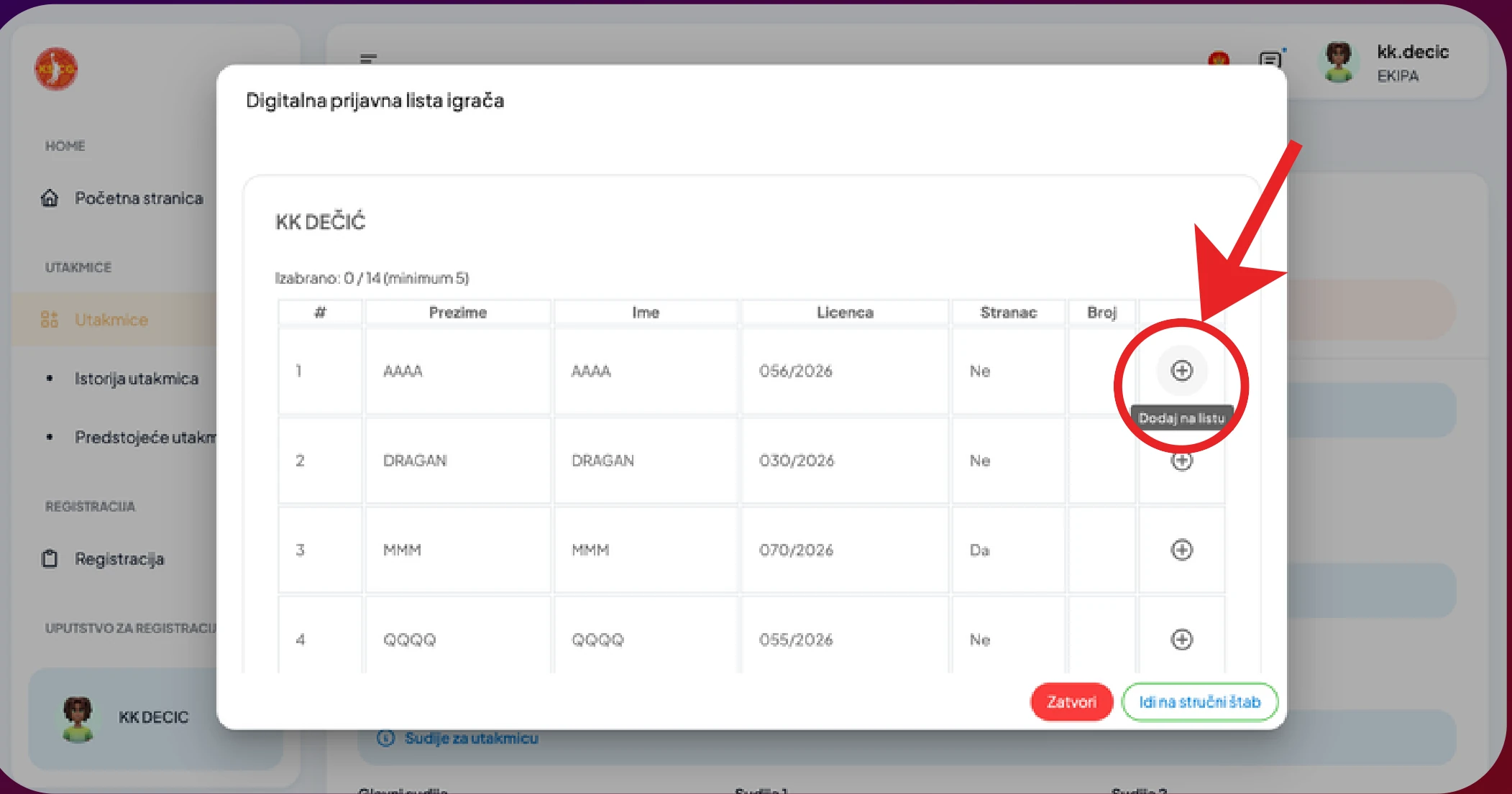
Digital match-day roster — the club selects players and jersey numbers before each match
The value of a centralized system isn't just in data entry. Once information is structured and interconnected, it can be used for advanced overviews and reporting. The administrative side of the E-KSCG platform covers a financial overview, a match calendar, referee and delegate reports, a round-by-round overview, and a match-officials report — every delegate report can also be printed or exported as a PDF, alongside the view inside the admin panel itself.
 01
01A view of business figures tied to competitions and seasons.

 02
02A view of match officials' assignments and work across a season.
 03
03The entire competition schedule reviewed in one place.
After logging in, an administrator sees the day's matches broken out as today's, upcoming, unprocessed and all matches, with search by league, season, home team, away team, venue, round, referee and delegate — all on one screen, with no need to hunt through the system for a single match.
Different participants in the system don't have access to the same information and functions. E-KSCG distinguishes six user roles, each with access tailored to its actual part in organizing the competition.
Full administration — competitions, schedules, master records, reports, users.
Team entries, player and coaching-staff registration, digital match-day rosters.
Approving match-day rosters and filing a detailed report from the match.
A record of assignments, ranking (FIBA / EL / national) and officiating history.
Oversight of competitions within assigned leagues and seasons.
A separate level that oversees delegates' work — an additional role uncovered during our review of the system, beyond the project's original brief.
Information that already exists in the system shouldn't have to be re-entered by hand every time it's needed in another process. A player is linked to a team. A team to a club. A team to a competition. A match to its teams. Match officials to a match. Data from those processes then feeds reporting — without duplicate entry, and without the risk that different parts of the system end up holding different versions of the same fact.
The interface hides the system's complexity and lets everyday tasks stay simple to complete. Behind a straightforward team-entry form or a digital match-day roster sit a large number of business rules, relationships, validations, user permissions and statuses — but the person using it, whether from a club, a referee's position, or a delegate's, shouldn't have to think about that technical complexity.
In reality, all of them draw on the same interconnected data. E-KSCG brings them together into a single digital environment where every subsequent process uses information the system already knows.
Less repetition. More control. One source of data. That's the business digitalization we build at SLAP IT.